

Follow listed sections and review the LCD basic knowledge with us! Orient Display also has a friendly and knowledgeable team of technical support staff to help you with any specific questions you might have. Feel free to Contact Us !

LCD History
In 1888, liquid crystals were first discovered in cholesterol extracted from carrots by Austrian botanist and chemist, Friedrich Reinitzer. In 1969, twisted-nematic (TN) mode of operation was discovered, which gave LCD the first commercial success. Learn more.

A History of Changes in the LCD Industry
In 1968, RCA unveiled the first experimental liquid crystal display. By the 1990s, TFT-LCD technology emerged, replacing bulky CRTs and standardizing the flat screens used today. Learn more.

China’s Panel Industry Is Now the World’s Largest — Was the Price Worth Paying?
In the early 2000s, China’s display market share was negligible. Today, aggressive expansion has secured over 70% of global LCD production, reshaping the entire tech economy. Learn more.

LCD Introduction
LCD stands for Liquid Crystal Displays which are commonly used in TVs and Computer monitors. it is also used as mobile device screens such as laptops, tablets and smartphones. Learn more.

How does LCD work?
What makes LCDs distinct from other display technologies is the layer of liquid crystals within. How does LCD technology work? .Learn more.

Twisted Nematic LCDs
Liquid crystals were actually discovered over 100 years ago, but they did not find commercial applications until the invention of the twisted nematic (TN) LCD by Schadt and Helfrich in 1971 (Schadt and Helfrich, 1971). Learn more.

Types of Monochrome LCDs
While color dominates consumer electronics, monochrome remains vital for industry. From cost-effective TN to high-contrast FSTN, these technologies offer unmatched reliability and low power consumption. Learn more.

Display Modes of Reflective, Transflective and Transmissive
Readability depends entirely on how an LCD manipulates light. Reflective displays utilize ambient sunlight, transmissive screens rely on backlights, and transflective modes effectively bridge the gap. Learn more.

Film Compensated Super Twisted Nematic (FSTN) LCDs
The biggest problem with early multiplexed LCDs was the reduction in contrast ratio with number of addressed lines. This problem was essentially eliminated with the invention of the film compensated super-twisted nematic (FSTN) LCD in the early 1980s. Learn more.

Difference between FSTN vs. TN LCD
A detailed introduction and comparison of FSTN (Film Compensated Super-twisted Nematic) LCD and TN (Twisted Nematic) LCD. Learn more.

Difference between TN and IPS
Two common and popular liquid crystal alignment techniques are twisted nematic (TN) and in-plane switching (IPS). Learn more.

Positive & Negative Mode
LCDs can either be normally on (positive) or off (negative), depending on the polarizer arrangement. Learn more.

Temperature Range
When selecting a Liquid Crystal Display Module or LCD Glass Panel, it is very important to identify the the range of its environmental temperature. Outlined in this section are the normal and wide temperature ranges of the LCD Modules and LCD panels offered by Orient Display. Learn more.

LCD Pixel Terms & Resolution Guide
The display resolution of a LCD is the number of distinct pixels in each dimension that can be displayed. It is usually quoted as width × height, with the units in pixels. Learn more.

Difference between LCD, TFT, IPS, LED and OLED
A detailed explanation and comparison of LCD, TFT, IPS, LED and OLED display .Learn more.

Difference between AMOLED and IPS TFT
Is AMOLED technology ready to offer a better alternative to TFT-LCDs for industrial applications? Are advances in TFT keeping up with the clarity offered? Learn more.

Passive LCD vs Active LCD and PMOLED vs AMOLED
Passive LCD, Active LCD and PMOLED , AMOLED are everywhere these days, but what’s the difference & which is better. Learn about the difference between Passive matrix LCD, Active matrix LCD and PMOLED, AMOLED, so next time you are starting a project, you know which one you need. Learn more.
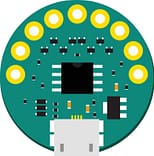
What is LCD Display Arduino?
What are types of Arduino and what functions do they have? Learn more.

LCD & TP Glossary
Orient Display’s Glossary of Liquid Crystal Display and Touch Panel Terminology. Downloadable PDF version included. Learn more.